
So, you’re thinking about becoming a full stack developer? Good choice. It’s one of the most in-demand roles right now. Companies want developers who can handle both frontend and backend — basically, someone who can build an entire application.
But here’s the thing… it’s not just about learning a few languages. It’s about understanding how everything connects. Let’s break it down in a simple way.
Table of Contents
- What is a Full Stack Developer?
- Skills Required
- Step-by-Step Roadmap
- Best Technologies
- Salary & Career Growth
- Pros and Cons
- Tips to Become One Faster
- FAQ
1. What is a Full Stack Developer?
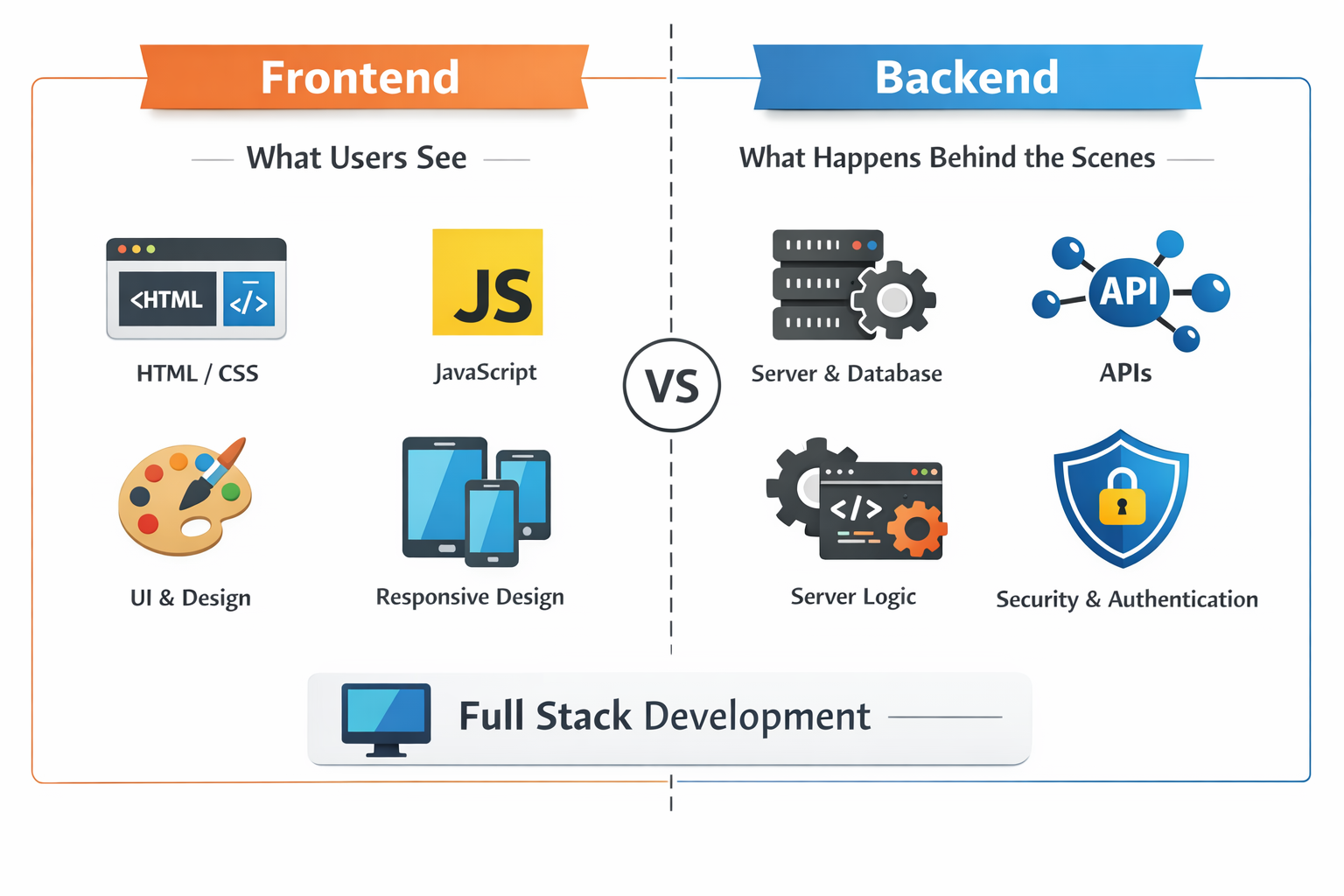
A full stack developer is someone who can build both the frontend and backend of an application. That means they handle everything — from designing UI to managing databases.
Frontend vs Backend
- Frontend: What users see (HTML, CSS, JavaScript)
- Backend: Server logic, APIs, database
- Database: Data storage (MySQL, MongoDB)
Honestly, companies love full stack developers because they reduce dependency on multiple teams.
Learn more about web development basics from
MDN Web Docs.
Also check this full stack project ideas guide to start building.
2. Skills Required for Full Stack Developer
You don’t need to learn everything at once. But yeah, you need a solid base.
Core Skills
- HTML, CSS, JavaScript
- Frontend frameworks (Angular, React)
- Backend (Node.js, .NET, Java)
- Database (SQL, MongoDB)
- Version control (Git)
Bonus Skills
- API integration
- Authentication (JWT, OAuth)
- Cloud basics (Azure, AWS)
- Docker (optional but useful)
Look, you don’t need to master everything. Start small and grow.
3. Full Stack Developer Roadmap (Step-by-Step)
Here’s a simple roadmap you can follow.
- Learn HTML, CSS, JavaScript
- Pick a frontend framework (Angular recommended)
- Learn backend (Node.js or .NET)
- Understand databases (SQL + NoSQL)
- Build projects
- Learn deployment
Important Tip
Don’t just watch tutorials. Build real projects. That’s where real learning happens.
You can explore real-world project ideas to practice.
4. Best Technologies for Full Stack Development
There are multiple stacks available. Choose based on your interest.
| Stack | Technologies | Best For |
|---|---|---|
| MERN | MongoDB, Express, React, Node.js | JavaScript lovers |
| MEAN | MongoDB, Express, Angular, Node.js | Enterprise apps |
| .NET Stack | .NET, Angular, SQL Server | Corporate jobs |
| Java Stack | Spring Boot, Angular/React | Scalable systems |
Since you already know .NET, honestly… .NET + Angular is a powerful combo.
5. Full Stack Developer Salary & Career Growth
Let’s talk about money. Because that matters too.
- Fresher: ₹3–6 LPA
- Mid-level: ₹6–15 LPA
- Experienced: ₹15–30+ LPA
Freelancing Opportunity
- Upwork projects
- Client-based websites
- SaaS product building
You can even build your own product like a task management app.
6. Pros and Cons of Being a Full Stack Developer
Pros
- High demand
- Better salary
- Flexibility in career
- Freelance opportunities
Cons
- Too many technologies to learn
- Can feel overwhelming
- Need continuous learning
Not gonna lie… it can feel tough at first. But it gets easier with practice.
7. Tips to Become a Full Stack Developer Faster
- Focus on one stack (don’t jump)
- Build real-world projects
- Practice daily (even 1 hour)
- Follow developers on YouTube
- Write blogs (good for SEO + learning)
Pro Tip
Try to build something useful. Like a support system or task manager. That’s what companies look for.
8. Frequently Asked Questions
What does a full stack developer do?
A full stack developer builds both frontend and backend parts of an application, including UI, server logic, and database.
Is full stack development hard?
It can feel difficult at first because of multiple technologies, but with practice, it becomes manageable.
Which language is best for full stack?
JavaScript is widely used, but .NET and Java are also strong options.
Can I become a full stack developer without a degree?
Yes. Many developers are self-taught using online resources and projects.
How long does it take to become one?
Typically 6–12 months with consistent learning and practice.
Do full stack developers get higher salary?
Yes, because they handle multiple roles in a project.
Is full stack developer a good career in India?
Absolutely. Demand is growing rapidly in startups and IT companies.
Final Thoughts
Becoming a full stack developer is one of the smartest career moves today. You don’t need to be perfect. Just start, stay consistent, and keep building.
If you stick with it, trust me… opportunities will come. Start today.