
So, you’re thinking about how to become a freelancer? Honestly, it’s one of the best ways to earn online today. You get freedom, flexible hours, and unlimited income potential.
But here’s the thing — many people jump in without a plan and struggle. If you want real results, you need the right approach from day one.
Table of Contents
- Choose the Right Skills
- Learn and Practice Coding
- Build a Strong Portfolio
- Join Freelance Platforms
- Get Your First Clients
- Set Your Pricing Strategy
- Grow Your Freelance Career
1. Choose the Right Skills
Before anything else, you need a skill. Sounds obvious, right? But many beginners try to learn everything at once. That’s a mistake.
Start with one focused skill
- Frontend: HTML, CSS, JavaScript
- Backend: .NET, Java, Node.js
- Full Stack: Combination of both
- Mobile: Flutter or React Native
If you’re already a .NET developer, you’re in a great position. You can offer web APIs, backend systems, or enterprise solutions.
Want a deeper roadmap? Check this developer learning guide.
2. Learn and Practice Coding
Learning is important, but practice is everything. You don’t need to be perfect. You just need to be useful.
Focus on real-world projects
- Build a login system
- Create a task manager app
- Develop a simple API
- Make a portfolio website
Honestly, clients don’t care about certificates. They care about what you can build.
You can also learn from trusted platforms like MDN Web Docs.
3. Build a Strong Portfolio
This is where most people fail. They learn skills but never show them.
Your portfolio should include
- 3–5 real projects
- Live demo links
- GitHub code
- Short description of each project
Look, your portfolio is your proof. No portfolio = no clients.
Pro Tip
Even if you don’t have clients yet, create “dummy client projects”. It works.
4. Join Freelance Platforms
Now comes the exciting part — getting paid.
Best platforms for beginners
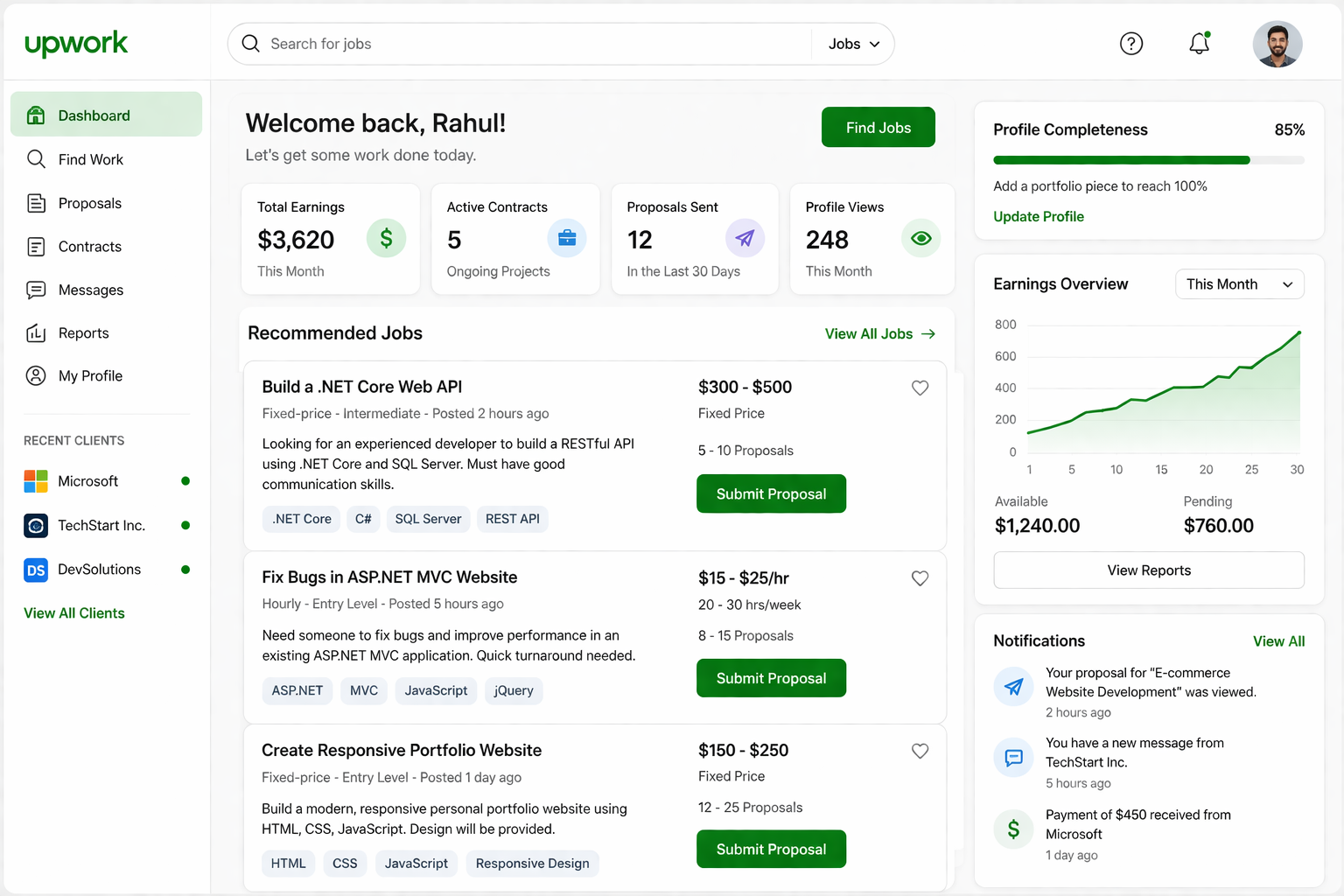
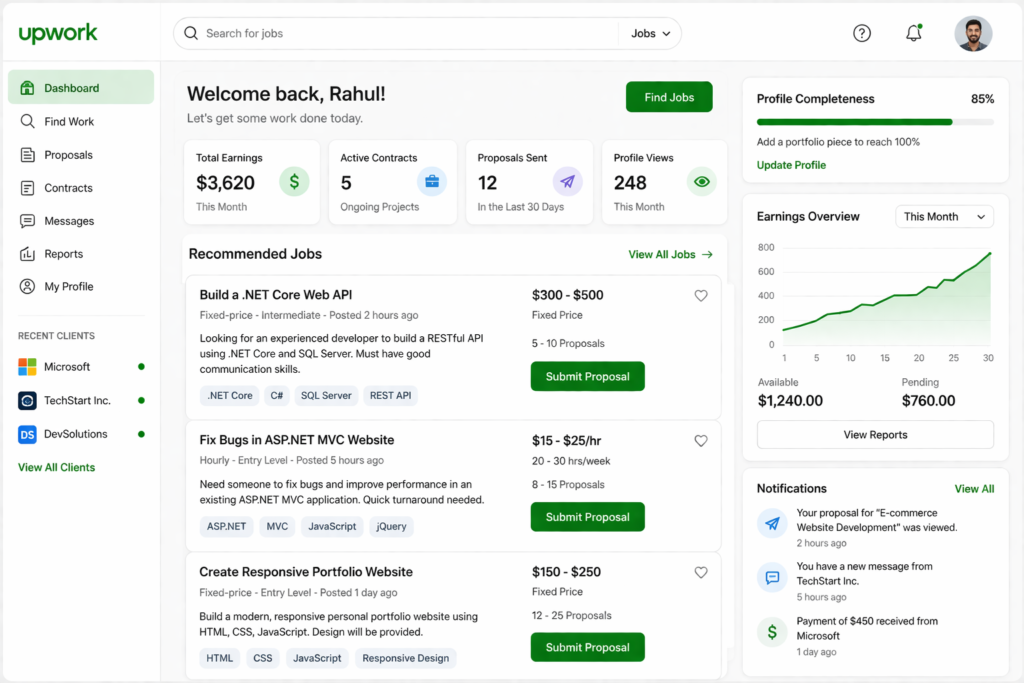
- Upwork
- Fiverr
- Freelancer
- Toptal (advanced)
Don’t sign up everywhere. Pick 1–2 platforms and focus.
Profile optimization tips
- Use a professional photo
- Write clear, simple bio
- Highlight your skills
- Add portfolio links
Think like a client — would you hire yourself?
5. Get Your First Clients
This is the hardest step. No sugar-coating here.
Your first job might pay less. That’s okay. Focus on experience.
How to win your first job
- Send personalized proposals
- Keep your message short
- Offer solutions, not just skills
- Start with small projects
Example: Instead of saying “I know C#”, say “I can fix your API issue in 2 days.”
Simple proposal structure
- Understand the problem
- Give a quick solution
- Show similar work
- End with a question
Small detail — but it works surprisingly well.
6. Set Your Pricing Strategy
Pricing can be confusing. Charge too high, no clients. Too low, no growth.
Beginner pricing strategy
- Start with ₹500–₹1500 per small task
- Increase after 3–5 projects
- Move to hourly or fixed packages
Freelancer vs Job Comparison
| Freelancing | Full-Time Job |
|---|---|
| Flexible time | Fixed schedule |
| Unlimited income | Fixed salary |
| Client dependency | Job security |
| Work from anywhere | Office-based (mostly) |
Both have pros and cons. Choose based on your goals.
7. Grow Your Freelance Career
Once you start getting clients, don’t stop improving.
Ways to grow faster
- Learn new technologies
- Build long-term clients
- Increase your rates gradually
- Create your own website
You can also build authority by sharing knowledge online — like blogs or YouTube.
Honestly, freelancing is not just coding. It’s communication, trust, and consistency.
FAQ — Frequently Asked Questions
1. How to become a freelancer developer with no experience?
Start by learning one programming skill and building small projects. Create a portfolio and apply for beginner-level freelance jobs.
2. Can beginners start freelancing?
Yes, beginners can start freelancing. Focus on small tasks and gradually improve your skills and confidence.
3. How much do freelance developers earn?
It depends on skills and experience. Beginners may earn ₹10,000–₹30,000/month, while experienced freelancers can earn much more.
4. Which platform is best for freelance developers?
Upwork and Fiverr are great for beginners. They offer plenty of small projects to get started.
5. How long does it take to become a freelancer developer?
It can take 3–6 months if you stay consistent with learning and practice.
6. Do I need a degree to become a freelance developer?
No, skills matter more than a degree. Many successful freelancers are self-taught.
7. How do I get clients outside platforms?
You can use LinkedIn, personal websites, and referrals to find clients directly.
Final Thoughts
So, now you know how to become a freelancer developer. It’s not complicated, but it does take effort.
Start small. Build projects. Get your first client. Then keep going.
If you stay consistent, freelancing can completely change your income and lifestyle. Seriously, just start — don’t overthink it.